Ruel Salmon Smolt-to-Adult Support
As part of the response to the severe decline in wild salmon returning to Scottish rivers, AFT are helping to investigate the potential to utilise smolt-to-adult rearing techniques in hatcheries to support small wild salmon populations in west coast rivers. This experimental approach attempts to mitigate for the currently high loss rate of smolts at sea and the subsequent decline in returning adults and reduced recruitment of juveniles. The most recent catchment-wide electrofishing survey in 2025 found that densities of juvenile salmon to be well below the expected 'benchmark' density for all the 16 sites surveyed.
AFT collected 177 wild parr from the River Ruel in autumn 2024 and summer 2025 which have been grown on to the smolt life stage in freshwater and are currently growing on to the mature adult life stage in saltwater tanks at the Otter Ferry Seafish facility in Loch Fyne. It is planned to re-introduce the adults that are maturing back to the river in autumn 2026 with the aim of increasing spawning effort and future juvenile recruitment.
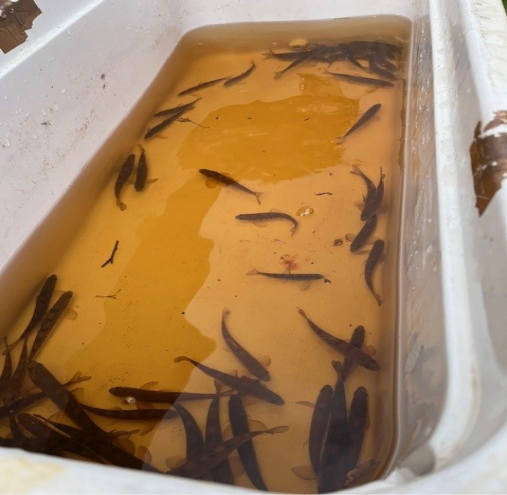
Transporting salmon parr from the River Ruel to the Otter Ferry Seafish hatchery facility
The process of removing wild smolts from the different areas of the River Ruel was undertaken under license from Marine Directorate and the management of the fish held in the hatchery has been informed by a genetic screening process that allows managers to avoid the use of any farm origin or inbred wild fish. The genetic characteristics of the hatchery population were compared to the wild population to ensure the hatchery-reared fish were representative of the wild population. PIT tags have also been used to track each individual fish through the rearing and release process. Although losses of fish held in the hatchery are expected and have occurred, the project is set to be able to reintroduce sufficient fish to be able to contribute to the wild spawning effort.
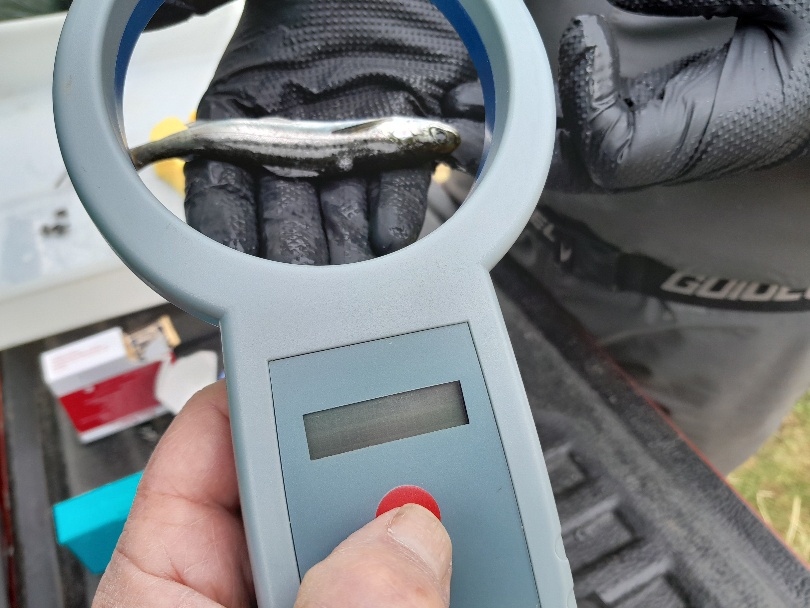
Hatchery held parr were PIT tagged and genotyped to allow tracking of each individual fish through the lifetime of the project
AFT will be taking a key role in the process of reintroducing the hatchery-reared adults back to the river and will monitor the subsequent behaviour of the released fish with radiotracking technology and further electrofishing and genetic studies in 2026 and 2027. This information will provide a clear a picture as possible of the relative effectiveness of this approach to conservation of small salmon populations in a west coast river compared to what may have happened if the parr were left in the river. It is also key to the concept of managing the wild fish populations in the River Ruel that habitat improvement initiatives started in 2017 continue at pace to provide potential to produce healthy wild smolts to be produced.
AFT is managing the wild fish aspect of the project on behalf of the River Ruel Improvement Association who have secured funding for the project from Salmon Scotland's Wild Fishery Fund.