River Goil habitat improvement project (2015-2026)
Since delivering a green bank revetment demonstration project with the Wild Trout Trust in 2015, AFT have been working to improve fish habitat in the River Goil. The work has primarily been aimed at improving the quality and quantity of bankside and instream cover for fish through a range of techniques.
The sandy loose soils in the Cowal region of Argyll make the very susceptible to erosion and collapse when the bankside armouring of trees are lost. Much of the soil eroded from long sweeping bends was being retained in the riverbed substrate as the channel became ever wider and the water ever shallower. These changes leave habitats for macroinvertebrates, and juvenile salmon and trout less productive
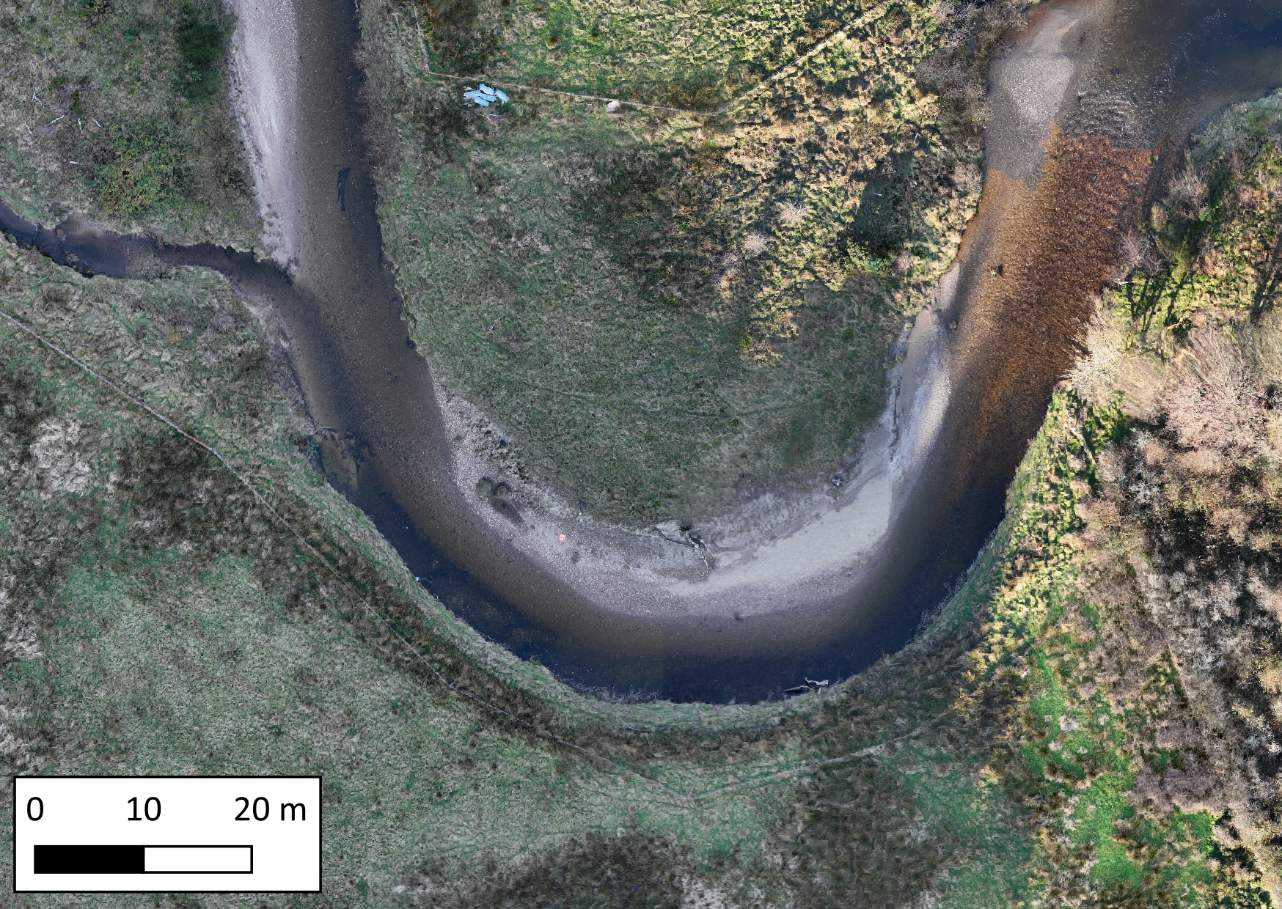
Much of the nursery habitat for salmon is compromised by fine sediment from collapsing riverbanks
To tackle this problem, AFT have worked with landowners, The Lochgoilhead Community and angling Club with financial support from the Loch Lomond & Trossachs National Park Authority to kick-start the process of reducing severe erosion by revegetating the riverbanks. The green bank revetment has been used as a first step in the process where recycled Christmas trees and forestry brash have been pinned to the foot of the riverbank using untreated larch posts driven into the bed of the river.
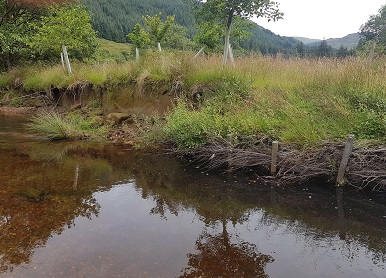
Sections of untreated (left) and green bank revetment treated bank (right)
The bank is regraded using a track machine and willow pegs and whips planted to begin the process of bank revegetation. This work begins the process of bank stabilisation and buys time for existing and newly planted trees to colonise more of the bank which are protected from grazers by livestock fencing and tree guards.
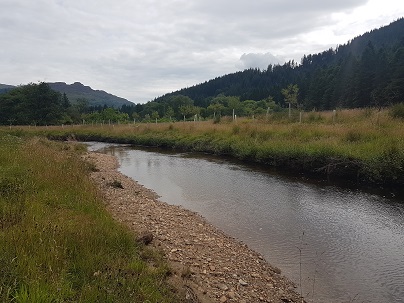
Stabilising long sections of bank has improved the quality of cover for fish while reducing the fine sediment in the riverbed
The patches of Japanese knotweed which can thrive in habitats fenced off from livestock have also been treated.
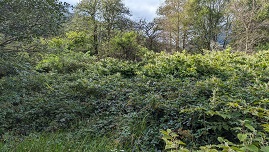
Dense patch of Japanese knotweed before treatment
While much of the fish habitat in the middle reach of the river has been improved, replacing damaged fencing (500 m of flood-damaged fence was replaced in 2025), planting new trees, eradicating invasive plants, repairing new sections of bank and maintaining the existing green bank revetments are ongoing with support of our project partners.