Creran nutrient replacement project (2023-2027)
Atlantic salmon and sea-run brown trout (sea trout) spawn and rear juveniles in some of Argyll's most nutrient-poor rivers where much of the catchment flows from hard slow weathering geology such as granite rock. This is particularly the case in the headwater streams where AFT have seen the most severe decline in juvenile trout and salmon. Reasons for this decline in headwater fish populations are many, which may include increasing water temperature where no shade is present, land use, intense flood events, and a reduction in the import of marine nutrients which adult migratory fish import into these habitats via eggs and carcasses of post-spawn mortalities.
In response to the decline in imports of nutrient into headwater streams, AFT are investigating the potential of replacing lost nutrients with similar marine-derived nutrients in the form of fish feed pellets.
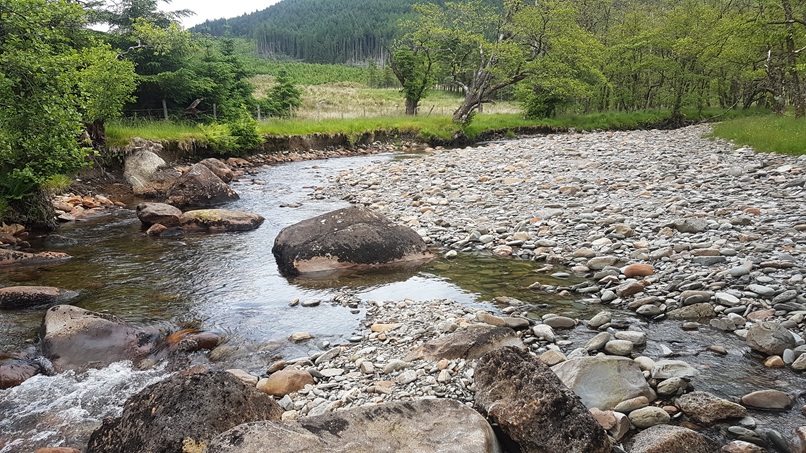
Recent floods have increase movement of riverbed substrates in the nutrient-poor headwaters of the River Creran
By calculating the potential number and weight of salmon that would normally spawn in the headwaters, a proportional approach has been undertaken as not to overwhelm or change the natural balance of these environments.
To measure any differences between sites where nutrients have been introduced in early summer compared to similar untreated sites, AFT have undertaken intensive electrofishing surveys to estimate the densities of young salmon and trout, and their individual weight and length found at the different sites.
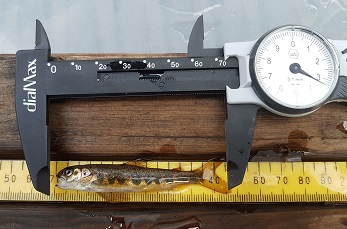
Comparing salmon fry length and weight in treated and untreated sites
The survey work on 5 paired sites in the headwaters of the River Creran, and tributaries of Allt Eilidh and the River Ure to assess the potential contribution of the addition of measured amounts of nutrient on the fish population is ongoing. Other surveys of fish populations in the lower reaches of the River Creran are also being undertaken to provide a wider picture of the health of migratory salmonid fish in the catchment. AFT is supported by funding from CAF America to undertake this project.