Adult Salmon Sampling
As part of a national sampling program, AFT have collected information on the characteristics from adult salmon returning to the Awe and Etive catchments. Since all net fisheries for Atlantic salmon have been closed, information on size, sex and age of fish needed to inform the national and international management of salmon has been more difficult to obtain. With funding from Marine Directorate and project coordination provided by Fishery Management Scotland, AFT have been collecting scale samples, length, weight data and photographic records from rod caught salmon returning to Argyll's rivers.
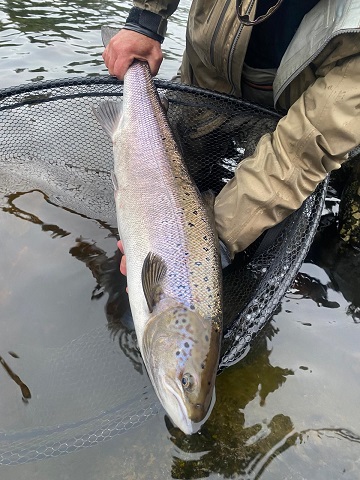
A sampled rod caught Atlantic salmon ready for release
To date, AFT have sampled over 100 adult salmon including 52 one sea-winter grilse and 37 multi sea-winter salmon which provide a part of the national picture over time of the health of Scotland's salmon populations. The analysis of scale samples (2021-23) found that most of these salmon and grilse spent their first 2 years in freshwater although smolt ages of one and three years were also found. The average weight of one sea-winter grilse ranged between 2.0 and 2.8 Kg and the weight of multi sea-winter salmon ranged between 5.2 and 6.5 Kg although sample sizes in some years were small for either group.
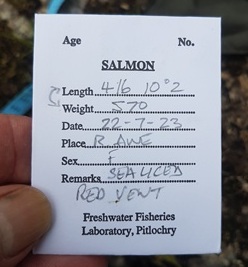
Information collected from the fish is recorded on scale packets
This information is being used to inform estimates of egg deposition in the catchment which are used to calculate conservation limits for salmon. AFT are also collecting information on signs of predator damage and disease present on the fish.
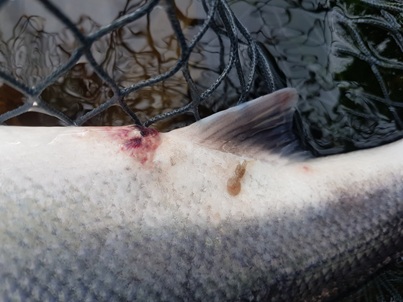
Signs of red vent disease on a fresh run salmon
Genetic samples from fresh-run rod caught adult salmon to inform future study of their likely spawning location in the catchment when matched with samples collected from juveniles from around the catchment. When combined with counter data, information on run-timing of adult salmon may be used to monitor the health of different genetic groups in different parts of the Awe catchment.
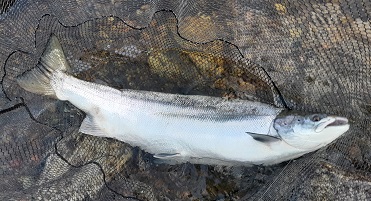
Salmon were held in the water while samples were taken
Handling of the fish being sampled were our priority, and retaining fish in a rubberised net mesh in the water was essential to keeping the fish wet and minimising handling of the fish before being returned to the water. No sampling was undertaken when water temperatures rose above 17°C to ensure a safe release.
We thank fishery owners and bailiffs for their cooperation with access to the fisheries and anglers for catching the fish.